Imagine this: a busy morning with a closet that can accommodate people of all skill levels. Art in Aging-Adaptive clothing has completely changed the way people dress by providing colorful options that are tailored to each individual’s needs. The boundaries of traditional clothing are broken by these designs, which are no longer restricted by conventional buttons or zippers.
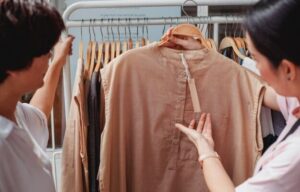
Let us paint a clear picture. Consider a shirt with magnetic fastenings. With a snap, you’re done! It’s revolutionary for people with poor dexterity. Elastic waists make it easy to put on pants, while velcro takes the place of buttons. This is about independence, not only practicality.
When was the last time you struggled with a difficult zipper? It can be a daily battle for people with impairments. With the use of adaptive apparel, dressing becomes more about expressing oneself than it is about overcoming barriers. Everyone may relate to the trend since everyone should be able to claim, “I did it myself.”
It sounds like a surveillance device, doesn’t it? Shoes that zip themselves, buttons that click. However, it is not fiction; it is fact. Particularly for the elderly or anyone with physical limitations, these improvements provide ease and convenience. The outcome is empowering, transforming a daily struggle into a daily triumph.
Think about a young autistic guy who has trouble with unpleasant seams and scratchy tags. Soft materials and seamless construction are common characteristics of adaptive apparel. Comfort takes precedence over style. Mom can take a break from making garments to fit her child’s demands, and nights can be peaceful and days less demanding. It’s encouraging to see that markets have begun to take notice.
Why did the fashion industry take so long to react, one could wonder? Accessibility and style have never coexisted on the fashion runway before. Things are changing, though. Designers are talking less, listening more, and utilizing new viewpoints. What become of it? apparel that celebrates individuality.
This shift is beautiful since it makes both the creator and the wearer happy. It’s an opportunity for designers to link compassion with creativity. For those who wear it, it’s about acknowledging their autonomy and dignity, not just about fabric and thread.
Additionally, adaptive fashion is no longer limited to a specific market. The movement is expanding, gaining momentum and recognition. In particular, young designers are eager. They view adaptive clothing as a necessary part of contemporary fashion rather than as a distinct line. This is a necessary evolution, not merely a trend.
What comes next on this transformational journey? Maybe the goal is to popularize adaptive fashion. Imagine department stores dedicating entire areas to adapted alternatives, which are praised for both their wearability and their inventiveness. It’s time for clothing to go beyond size to accommodate people with as bright minds as the clothes they wear.
A breath of fresh air, or perhaps more accurately, a breath of freedom, is what adaptive clothing is. It’s about embracing each day with style and comfort and taking on the world with assurance. Because fashion is more than just clothes when it’s available to everyone; it’s empowerment woven into every stitch. Every single item? a celebration of individualism, freedom, and expression.